
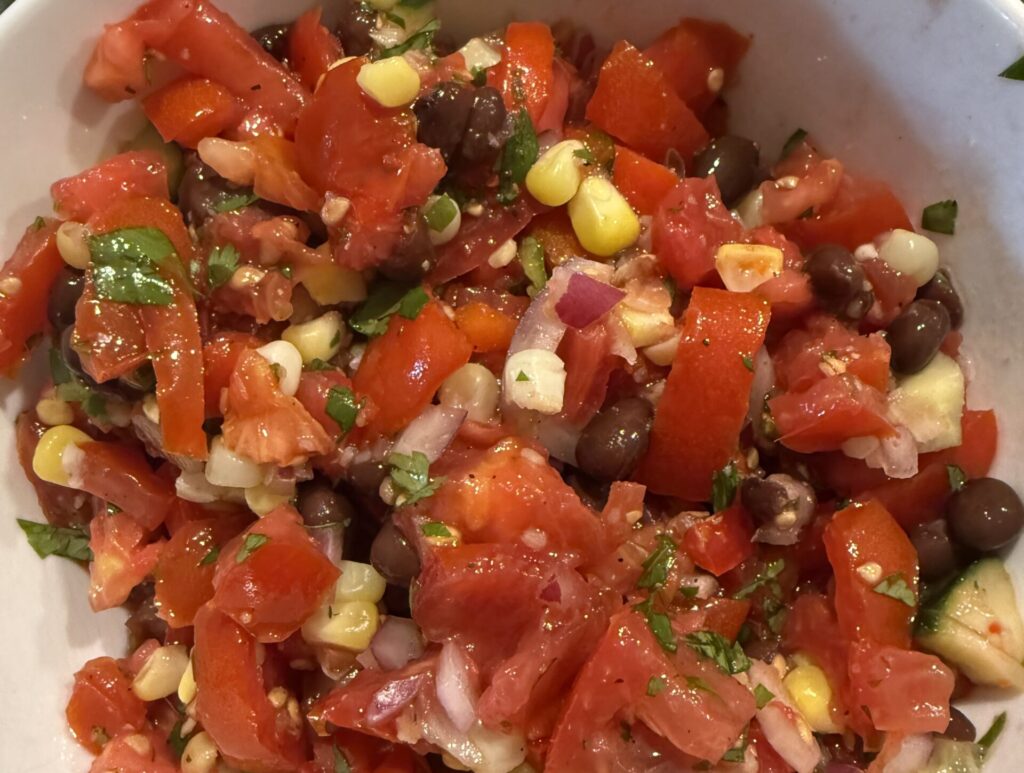
The Health Benefits of Homemade Salsa
I have never enjoyed canned salsa with all the preservatives, so I started making my own many years ago. Every August I look forward to picking the harvest of tomatoes and jalapeños from my backyard garden. This summer has been a fantastic season for growing tomatoes, with long stretches of hot weather.
Salsa is also an excellent post-workout snack to have after a hard rollerski or mountain bike workout. Add black beans, corn, and cucumbers for extra protein and carbs! If you don’t have your own tomatoes, head to your favorite grocery store or farmers’ market to buy fresh Roma tomatoes and jalapeños.
Health Benefits of Salsa
Homemade salsa is a nutrient-dense, highly beneficial addition to your diet. Because it is essentially a mixture of fresh vegetables, herbs, and citrus, it offers a range of health benefits.
- Rich in Essential Nutrients: Salsa is packed with vitamins and minerals, including Vitamins A, C, E, and K, as well as potassium. These nutrients support immune function, collagen production, vision, and skin health.
- Supports Heart Health: The lycopene in tomatoes is linked to a reduced risk of heart disease. Additionally, ingredients like garlic and onions support healthy blood pressure, and salsa is naturally cholesterol-free.
- High in Antioxidants: Ingredients like tomatoes, onions, and peppers are rich in antioxidants such as lycopene and quercetin, which can help reduce inflammation and lower the risk of chronic diseases.
- Aids Digestion: The fiber in the vegetables supports a healthy digestive system and promotes fullness, which can help control appetite.
- Metabolism Boost: The capsaicin found in spicy peppers can temporarily boost your metabolism and assist in fat burning.
- Hydrating: Because tomatoes and other vegetables have high water content, salsa contributes to your daily hydration needs.
Why Homemade is Best!
Making salsa at home offers significant advantages over store-bought, jarred versions:
- Higher Nutrient Retention: Cooking processes used for jarred salsas can destroy up to 30% of the Vitamin C content. Homemade salsa, often served raw, retains these enzymes and vitamins.
- Controlled Ingredients: You control the ingredients, so you can avoid the high sodium, added sugars, preservatives, and stabilizers often found in commercial brands.
- Customizable: You can adjust the heat, salt, and acidity to perfectly match your preferences and dietary needs.
Kim’s Homemade Garden Salsa Recipe
- 4 Cups Roma tomatoes, diced ( I do not use a food processor since I like my salsa chunky, but if you prefer a smoother texture, then mix away).
- 1/2 Cup diced yellow or red onion.
- 1 Tablespoon diced garlic ( I cheat and use the already processed garlic to save time).
- 2 Tablespoons lime juice ( 2 limes)
- 4 Teaspoons chopped fresh jalapeño pepper (remove seeds if you prefer mild salsa)
- ¼ Cup diced cilantro
- ½ Teaspoon cumin
- ½ Teaspoon sea salt
- ½ Teaspoon black pepper
- Optional: Add Black beans, corn, cucumber, or mango for extra protein and carbs!
Directions: Stir all the chopped ingredients together and enjoy. I prefer not to use a food processor to keep a nice, chunky, fresh consistency. Drain excess liquid when needed.
Happy Salsa Making!
Kim Rudd