
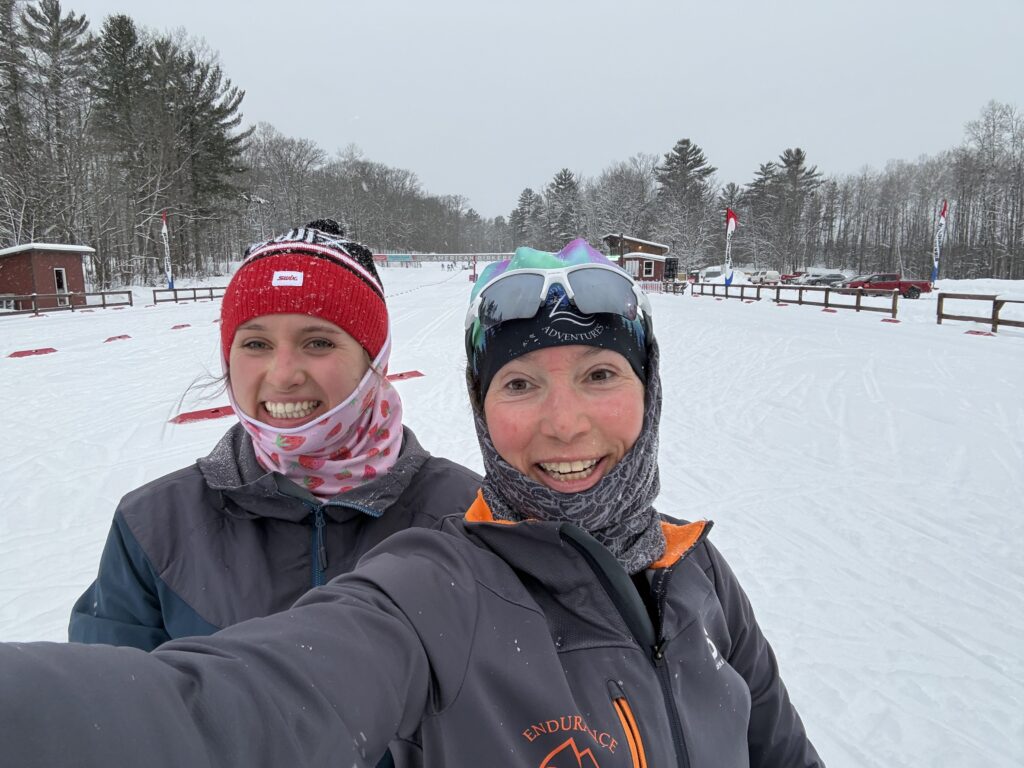
Prologue, by Kim Rudd – The incidence of compartment syndrome among cross-country skiers has increased over the years, and for many has been misdiagnosed. Both of my daughters experienced lower shin pain while performing the skate-ski technique during their high school racing years.
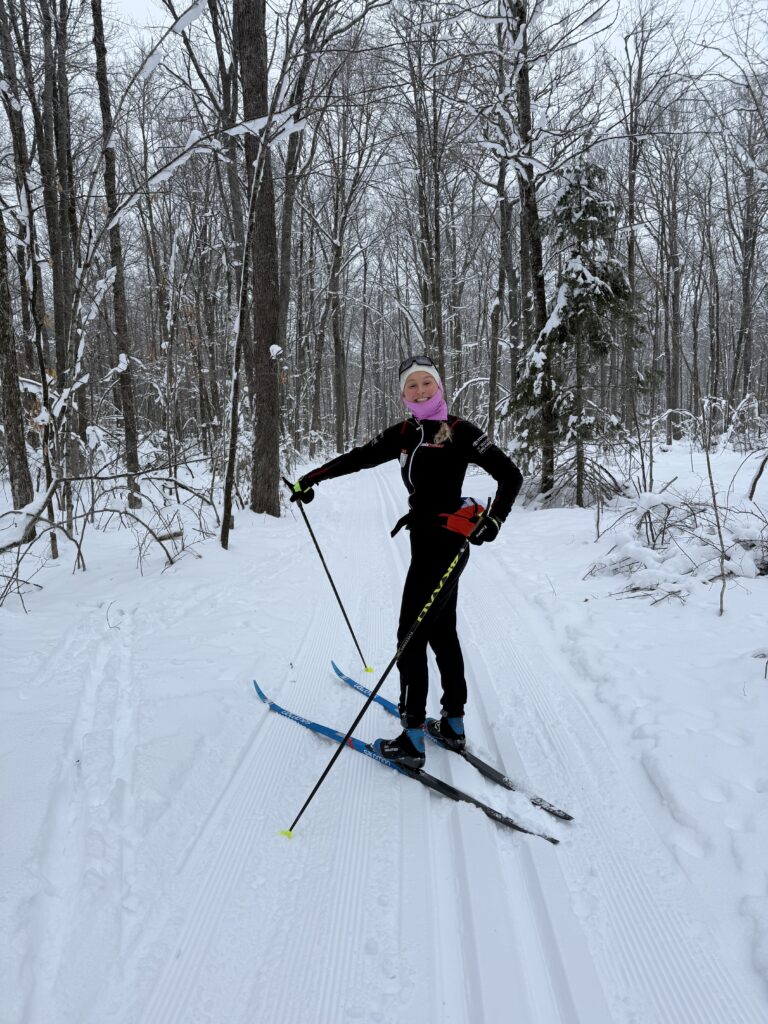
My oldest daughter, Hannah, was diagnosed with lower Popliteal Artery Entrapment Syndrome at Fairview Hospital in MN during her high school racing years. She had a successful entrapment release surgery and has continued to race without pain for the last ten years.
My youngest daughter, Leah, was also diagnosed with Popliteal Artery Entrapment Syndrome, but following the surgery, she continued to experience shin pain and numbness while ski racing. Her senior year in high school shge was then diagnosed with compartment syndrome at the Twin Cities Sports Mayo Clinic. In the spring of her senior year of high school, she had bilateral compartment release surgery at the Mayo Clinic.
Unfortunately, she continued to experience shin pain during her college racing years at Montana State and decided to stop competing. The following year, she had more testing at the Bozeman hospital and was diagnosed with upper entrapment syndrome. Leah had two successful upper entrapment release surgeries in Billings, Montana. After five years of multiple surgeries and physical therapy, she can now run and ski without pain.
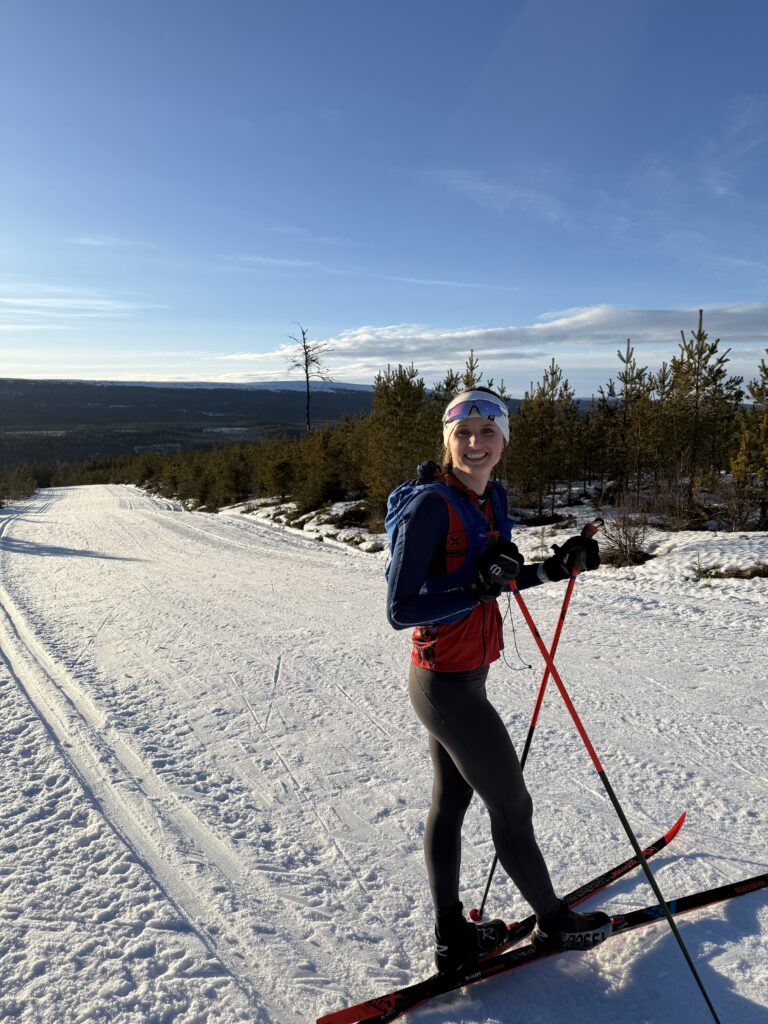
It has been a joy to see Leah smiling and enjoying trail running and cross-country skiing again! Over the last few years, she has traveled with her parents to compete in the Norwegian Birken, the Swedish Vasaloppet, and, last year, the American Birkebeiner.
To say the least, this has been quite the journey for both Leah and her parents. Over the years, many other parents have contacted me for information on how to help their children struggling with similar symptoms. It can be an emotional roller coaster trying to figure out a diagnosis, treatment, and therapy plans. My friend Cara Battles has written the article below on chronic external compartment syndrome. I hope this article raises awareness among those currently struggling with lower shin pain.
A Physical Therapy Perspective By Cara Battles, DPT, OCS
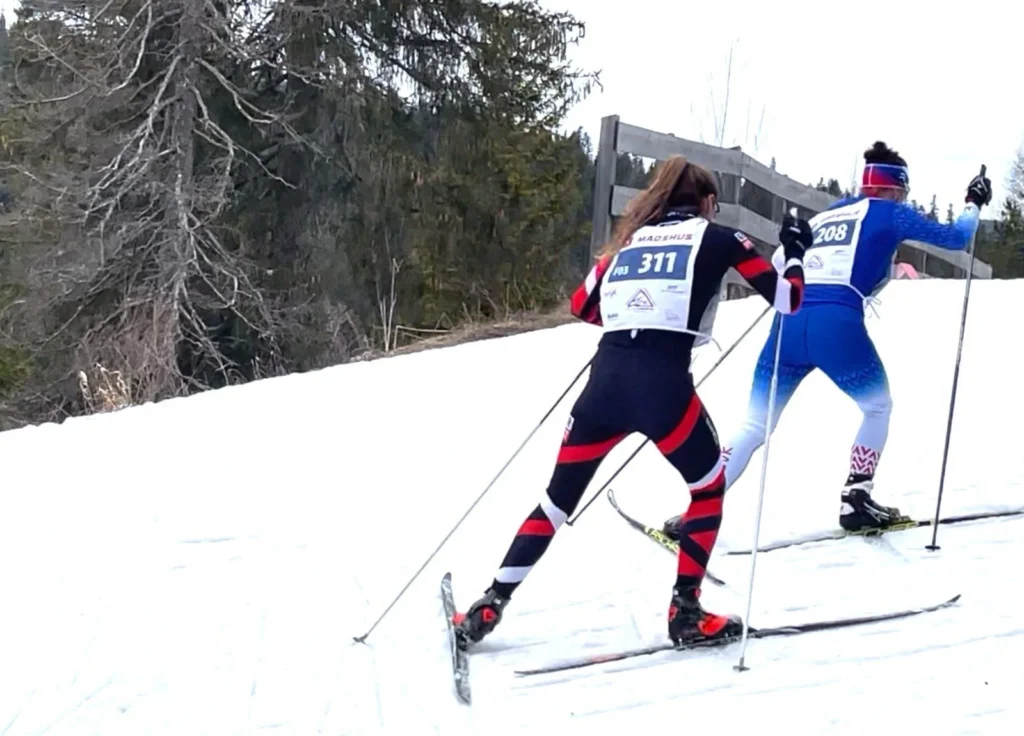
As a physical therapist who works with both recreational and professional athletes, I have seen firsthand the toll that repetitive, high-intensity sports can take on the body. Common conditions such as muscle strains, shin splints, and tendinitis are relatively easy to diagnose and manage with the right physical therapy and commitment to rehabilitation. However, there is a lesser-known and less frequent condition called Chronic Exertional Compartment Syndrome (CECS) that is challenging to diagnose and difficult to manage. CECS is a condition that affects endurance athletes, like runners and cross-country skiers. This is a potentially disabling condition for athletes.
As a medical professional specializing in endurance athletes and an endurance athlete myself, I have developed a greater awareness of this condition over time. My clinical experience with CECS has motivated me to share insights to help athletes receive a timely diagnosis and an appropriate treatment plan, enabling them to return to their sport as soon as possible.
Understanding CECS
CECS develops over time and is not considered an emergency. It can occur in the lower or upper extremities. In endurance sports, it typically involves the lower extremities, but this depends on the specific sport. A rower, for example, may develop upper extremity CECS.
CECS is characterized by increased pressure within a muscle compartment during exercise, leading to pain, tightness, and potential dysfunction. A compartment is a group of muscles, nerves, and blood vessels bundled together and surrounded by fascia. The fascia is like a sleeve. Some say fascia is inelastic, but some would argue that it does have some elasticity. Either way, there is only so much room inside the fascia. There are 4 compartments in the lower leg: anterior, posterior, deep posterior, and lateral.
With activities such as skate skiing, running, or cycling, blood flow to the muscles you are using increases. Muscles require oxygen to fuel their efforts, and blood transports oxygen. Blood flow also helps deliver nutrients and flush away waste. Increased blood in the muscles causes swelling. Swelling increases the pressure inside the compartments. Pressure increases to a certain level.
In compartment syndrome, pressure within a compartment exceeds normal levels. The exact pathophysiology remains poorly understood. One common theory is that there are varying degrees of elasticity in fascia, and some fascia can’t accommodate the increase in pressure. Another theory is that muscles in the compartments hypertrophy. The muscles occupy more space within the compartments, thereby reducing the capacity to tolerate increased blood flow. Pressure within the compartment increases to a level that compresses blood vessels and nerves. This causes pain, numbness, or even weakness. The symptoms continue to build until the exercise is stopped. Once the exercise is stopped, symptoms typically subside.
Why Are Endurance Athletes at Risk?
Endurance athletes are particularly susceptible to CECS due to several key factors:
- Repetitive Motion: Endurance sports are repetitive, high-intensity activities that demand substantial muscular effort. These activities cause the muscles to repeatedly swell with blood, especially during long sessions or steep climbs.
- Muscle Hypertrophy (Growth): Over time, regular training leads to muscle growth (beneficial for performance). As mentioned above, larger muscles can overfill the available space within the fascia, leaving less room for swelling during exercise.
- Faulty Technique and Posture: Improper technique or overloading certain muscle groups can intensify swelling.
- Poor Recovery: Inadequate recovery between sessions can lead to chronic swelling or inflammation, increasing the risk of developing compartment syndrome.
Sport Specific Considerations
There are sport-specific considerations with compartment syndrome.
Nordic skiers: CECS most commonly occurs in the lateral (outside) or anterior (front) compartments. These compartments house nerves and muscles that control ankle dorsiflexion (pulling the foot up) and stabilize the ankle for balance. Dorsiflexion is a vital component to Nordic skiing. Skiers maintain a level foot through most of the lateral push phase. They hold their foot level to maintain a level ski during the swing phase. In the glide phase, the ankle stabilizers are working to balance you on your ski. The shin muscles are quite active in all phases of skate skiing. There is minimal opportunity for these muscles to relax, resulting in high blood flow demand.
Runners: the anterior compartment is more often involved. The posterior (back) compartment can also be involved, but less often. Runners repeatedly pull their foot up, to varying degrees, in the swing phase of running. Runners with CECS in the anterior compartment may experience a foot drop or feel the foot slap onto the ground. Some studies suggest that improper running mechanics may play a role. One could speculate that individuals who land with a heel strike may be at greater risk of anterior compartment syndrome. A heel striker activates the shin muscles more, thereby pulling the toes up to land on the heel. In the same vein, a toe runner would likely have more problems in the posterior compartments, as the posterior compartments contain the calf muscles. Running on uneven terrain will require greater stabilization of the ankle muscles and, again, demands increased blood flow to the lower limb.
How Do You Know if You Have Compartment Syndrome?
There are many causes of pain in the lower legs. Stress fractures, shin splints, strains, pinched nerves, and many other pathologies can cause symptoms similar to compartment syndrome. Signs and symptoms to note when considering compartment syndrome:
- Tightness and pain that build during exercise and continue to build to a disabling level. This will happen more during sustained or high-intensity efforts.
- Pain that subsides with rest but recurs during the next session.
- Numbness or tingling in your foot. It can feel like pins and needles or loss of sensation.
- A feeling of weakness in the legs after the pain and inability to create power.
- CECS is often bilateral, meaning it occurs in both legs simultaneously. This is not common in most other injuries.
- Symptoms are difficult to reproduce during a clinical examination. There may be tenderness and tightness in the involved muscles, but without exertion, symptoms will not be reproduced.
If these sound familiar, seek help from a sports medicine physician or sports physical therapist. Left untreated, this can cause chronic problems that may permanently prevent you from participating in your sport. Diagnosis typically begins by ruling out other possible problems. The gold standard for diagnosing CECS is a compartment pressure measurement. This is a test in which pressures within the compartments are monitored during exercise in a clinical setting. This is often performed on a treadmill. Keep in mind that if you are a skate skier, running may not reproduce your symptoms. Please inform the ordering physician if the testing is performed on a treadmill.
Managing and Treating CECS
While there is little high-quality research on the most effective treatment for CECS, several strategies to minimize pressure in specific compartments warrant exploration. The suggestions presented are based on my clinical and athletic experience.
- Consider your training load. Conduct an honest analysis of how much you exercise and how much you rest. Ways to reduce the workload include taking a rest day during the week, cutting back on high-intensity workouts, or shortening each workout. Cross-training is a very good idea. A skate skier could cross-train with classic skiing, as CECS is less common with classic skiing. A runner could cross-train with swimming or cycling. CECS is present among cyclists, albeit at a lower rate. If using cycling for cross-training, using flat pedals would minimize activation of the shin muscles. Youth training plans should adhere to the USSA XC age- and phase-specific training guidelines, available at https://www.usskiandsnowboard.org/sport-programs/training-systems.
- Assess any recent changes in medications or supplements that correlate with the onset of symptoms. There was a time when it was speculated that creatine supplements may contribute to this. There was no conclusive research to support or refute this, but it is worth considering.
- For Nordic skiers, typically skate skiers, consider trying a lighter pair of skis. The greater the ski weight, the higher the workload on the muscles. Skiers can work with a coach to assess technique and correct faulty movement patterns. Relaxed skiing is also a good way to relieve tension in your muscles.
- Runners can seek out a coach or physical therapist who understands running mechanics. Modifications to the form will depend on which compartment is involved. Try a variety of footwear. Certain shoes may decrease activation or increase activation of certain muscles around the foot and ankle.
- For both runners and skiers, assessing lower-leg mechanics, muscle strength, and mobility can identify imbalances that may add undue stress to the lower legs. My advice is to seek a sports physical therapist with a deep understanding of anatomy, biomechanics, and pathology, and an extensive toolbox for strengthening and stretching specific muscle groups and retraining movement patterns to meet your sport-specific needs.
- Massage work on the lower leg can help to manage or delay the onset of symptoms. If an athlete is trying to get through a season, adding this to their treatment regimen may provide some relief and is worth trying. However, this is not likely to resolve the underlying problem.
CECS is difficult to treat, and for many, the ultimate fix is surgical. Surgery has good outcomes, with 70-90% success rates. Athletes and physicians often prefer to exhaust conservative treatment options prior to entertaining surgery. In some cases, conservative options may work, or at least manage symptoms to get through a season.
If you have questions or comments about CECS or would like to problem-solve your particular case, please don’t hesitate to reach out. My email is dr.battles@precppt.com, and my website is www.precperfpt.com.

Cara Battles, DPT, is a Doctor of Physical Therapy, strength coach, and competitive endurance athlete. She owns Precision Performance Physical Therapy in Minnetonka, Minnesota, where she specializes in orthopedic sports medicine, post-surgical rehabilitation (particularly ACL reconstruction), and high-level return-to-performance for endurance and team-sport athletes.
Cara currently serves as the physical therapist for Team Birkie and is part of the medical pool for U.S. Ski & Snowboard, with prior experience as the lead PT for Minnesota United FC and as medical coverage for World Cup and Junior National cross-country ski events. She also coaches strength and Nordic skiing with the Loppet Foundation and competes in Nordic skiing, mountain biking, and gravel racing.